Excerpts

Ben Franklin's Idea

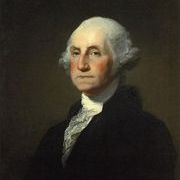
Ben FranklinIn the meetings which resulted in the Constitution of the United States of AmericaBen Franklin said concerning the war for independence from Great Britain:

... we had daily prayers in this room for the Divine protectionOur prayers, sir, were heard, ...

Benjamin Franklin asked for prayer at those meetings which gave us the Constitution of the United States:

I therefore beg leave to move that henceforth prayers imploring the assistance of Heaven, and its blessings on our deliberations, be held in this assembly every morning before we proceed to business,1

In the meetings which resulted in the Constitution of the United States of America, Dr. Franklin, on the morning of the 28th of June, 1787, rose, and delivered the following address:

— In the beginning of the contest with Great Britain, when we were sensible of danger, we had daily prayers in this room for the Divine protection. Our prayers, sir, were heard, and they were graciously answered. All of us who were engaged in the struggle must have observed frequent instances of a superintending Providence in our favor. To that kind Providence we owe this happy opportunity of consulting in peace on the means of establishing our future national felicity. And have we now forgotten that powerful Friend? Or do we imagine we no longer need his assistance?

I have lived, sir, a long time, and the longer I live, the more convincing proofs I see of this truth, — that God governs in the affairs of men. And if a sparrow cannot fall to the ground without his notice, is it probable that an empire can rise without his aid? We have been assured, sir, in the sacred writings, that 'Except the Lord build the house they labor in vain that build it.' I firmly believe this; and I also believe that without his concurring aid we shall succeed in this political building no better than the builders of Babel. We shall be divided by our little, partial, local interests; our projects will be confounded, and we ourselves become a reproach and by-word down to future ages. And, what is worse, mankind may hereafter, from this unfortunate circumstance, despair of establishing governments by human wisdom, and leave it to chance, war, and conquest.

I therefore beg leave to move that henceforth prayers imploring the assistance of Heaven, and its blessings on our deliberations, be held in this assembly every morning before we proceed to business, and that one or more of the clergy of this city be requested to officiate in that service.

  • 1. Christian Life and Character of the Civil Institutions of the United States, Developed in the Official and Historical Annals of the Republic., by B. F. MORRIS, Philadelphia, 1864
Webster on Origin of US Nation

"Let us not forget the religious character of our origin. Our fathers were brought hither by their high veneration of the Christian religion. They journeyed by its light and labored in its hope. They sought to incorporate it with the elements of their society, and to difiuse its influences through all their institutions, - civil, political, social, and educational. Let us cherish their sentiments, and extend their influence still more and more, until the full conviction that that is the happiest society which partakes in the highest degree of the mild and peaceful spirit of Christianity." 1

  • 1. Christian Life and Character of the Civil Institutions of the United States, Developed in the Official and Historical Annals of the Republic., by B. F. MORRIS, Philadelphia, 1864, pp. 58-59

Washington's Thanksgiving

Whereas it is the duty of all Nations to acknowledge the providence of Almighty God, to obey his will, to be grateful for his benefits, and humbly to implore his protection and favor -- and whereas both Houses of Congress have by their joint Committee requested me "to recommend to the People of the United States a day of public thanksgiving and prayer to be observed by acknowledging with grateful hearts the many signal favors of Almighty God especially by affording them an opportunity peaceably to establish a form of government for their safety and happiness."

Now therefore I do recommend and assign Thursday the 26th day of November next to be devoted by the People of these States to the service of that great and glorious Being, who is the beneficent Author of all the good that was, that is, or that will be -- That we may then all unite in rendering unto him our sincere and humble thanks -- for his kind care and protection of the People of this Country previous to their becoming a Nation -- for the signal and manifold mercies, and the favorable interpositions of his Providence which we experienced in the tranquility [sic], union, and plenty, which we have since enjoyed -- for the peaceable and rational manner, in which we have been enabled to establish constitutions of government for our safety and happiness, and particularly the national One now lately instituted -- for the civil and religious liberty with which we are blessed; and the means we have of acquiring and diffusing useful knowledge; and in general for all the great and various favors which he hath been pleased to confer upon us. 

And also that we may then unite in most humbly offering our prayers and supplications to the great Lord and Ruler of Nations and beseech him to pardon our national and other transgressions -- to enable us all, whether in public or private stations, to perform our several and relative duties properly and punctually -- to render our national government a blessing to all the people, by constantly being a Government of wise, just, and constitutional laws, discreetly and faithfully executed and obeyed -- to protect and guide all Sovereigns and Nations (especially such as have shewn kindness onto us) and to bless them with good government, peace, and concord -- To promote the knowledge and practice of true religion and virtue, and the encrease of science among them and us -- and generally to grant unto all Mankind such a degree of temporal prosperity as he alone knows to be best.

Given under my hand at the City of New York the third day of October in the year of our Lord 1789.

George Washington 1

  • 1. Christian Life and Character of the Civil Institutions of the United States, Developed in the Official and Historical Annals of the Republic., by B. F. MORRIS, Philadelphia, 1864

Lincoln on Christianity

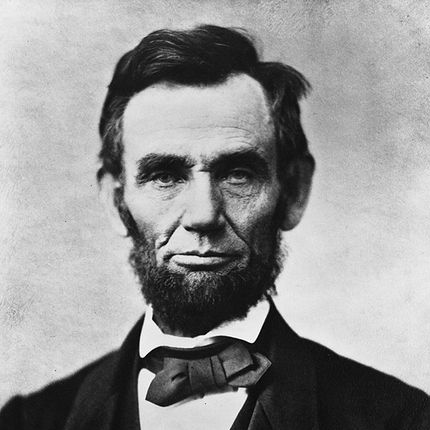
Lincoln

At President Abraham Lincoln's request, Secretary of State William H. Seward wrote this:

I am further instructed to say that the exposition ... in the Pastoral Letter, of the intimate connection which exists between fervent patriotism and true Christianity, seems to the President equally seasonable and unanswerable. 1

  • 1. Christian Life and Character of the Civil Institutions of the United States, Developed in the Official and Historical Annals of the Republic., by B. F. MORRIS, Philadelphia, 1864

Governor Wright on Secret of Founding Fathers' Strength and Power

Governor of Indiana, Senator in Congress, Representative in Congress, Minister at the Court of Berlin, Joseph A. Wright, in the city of New York, May, 1863, said

... The Bible is abroad. ... Its principles underlie all civil institutions and social structure.

Nations and men must fully recognize God's truth and providence in all their doings and actions. Our fathers fully realized it; and therein alone consisted their power and strength. 1

  • 1. Christian Life and Character of the Civil Institutions of the United States, Developed in the Official and Historical Annals of the Republic., by B. F. MORRIS, Philadelphia, 1864, pp. 774-775

Lincoln quotes Washington

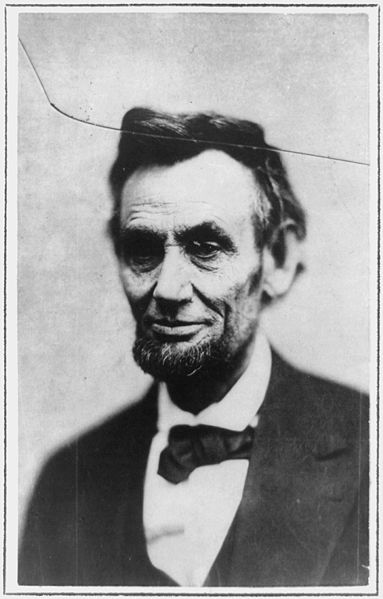
Lincoln

Abraham Lincoln, in an order to the US Army during the Civil War, quotes George Washington's order at the beginning of the US war for independence: 1

The first general order issued by the Father of his Country, after the Declaration of Independence, indicates the spirit in which our institutions were founded and should ever be defended: 

- "The general [George Washington] hopes and trusts that every officer and man will endeavor to live and act as becomes a Christian soldier defending the dearest rights and privileges of his country."

This was part of an order issued by President Lincoln on Nov. 16, 1862. Below is the full order:

The President, commander-in-chief of the army and navy, desires and enjoins the orderly observance of the Sabbath by the officers and men in the military and naval service. The importance for man and beast of the prescribed weekly rest, the sacred rights of Christian soldiers and sailors, a becoming deference to the best sentiment of a Christian people, and a due regard for the Divine will, demand that Sunday labor in the army and navy be reduced to the measure of strict necessity. The discipline and character of the national forces should not suffer, nor the cause they defend be imperilled, by the profanation of the day or the name of the Most High. At this time of public distress, adopting the words of Washington in 1776, ''men may find enough to do in the service of God and their country, without abandoning themselves to vice and immorality." The first general order issued by the Father of his Country, after the Declaration of Independence, indicates the spirit in which our institutions were founded and should ever be defended: - "The general hopes and trusts that every officer and man will endeavor to live and act as becomes a Christian soldier defending the dearest rights and privileges of his country."

  • 1. Christian Life and Character of the Civil Institutions of the United States, Developed in the Official and Historical Annals of the Republic., by B. F. MORRIS, Philadelphia, 1864, p. 789

The Sixth US President on Christianity and Government

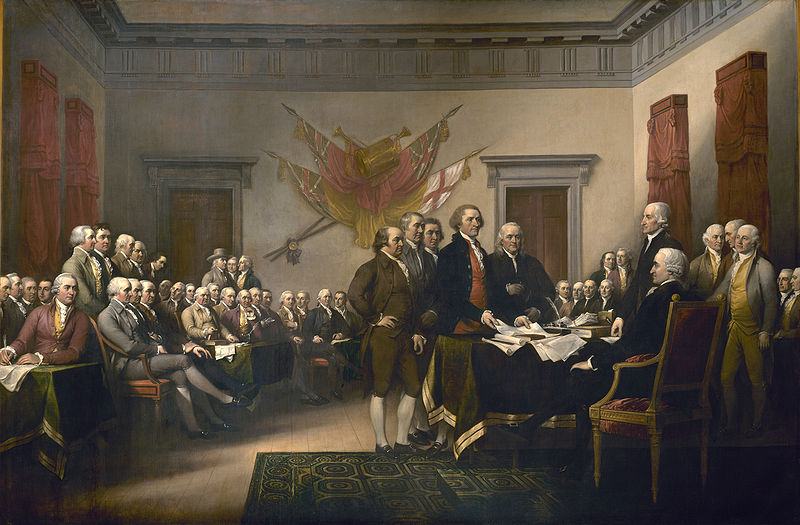
Declaration of Independence

"The highest glory of the American Revolution was this: it connected in one indissoluble bond the principles of civil government with the principles of Christianity."
    - John Quincy Adams, 6th US President 1

  • 1. Christian Life and Character of the Civil Institutions of the United States, Developed in the Official and Historical Annals of the Republic., by B. F. MORRIS, Philadelphia, 1864

The Second US President's View of America

John Adams (2nd US President), in contemplating the Christian colonization of the American continent, uttered the following: - 1

"I always consider," said he, "the settlement of America with reverence and wonder, as the opening of a grand scheme and design of Providence..."

  • 1. Christian Life and Character of the Civil Institutions of the United States, Developed in the Official and Historical Annals of the Republic., by B. F. MORRIS, Philadelphia, 1864, p. 110