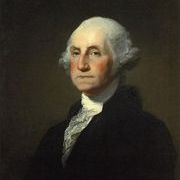
CHRISTIAN CHARACTER OF WASHINGTON - WEBSTER'S VIEW OF WASHINGTON - HENRY'S - JEFFERSON'S - FOX'S - LORD ERSKINE'S - LORD BROUGHAM's - BANCROFT'S - IRVING'S - CHRISTIAN PRINCIPLES THE BASIS OF WASHINGTON'S LIFE AND CHARACTER - EARLY CHRISTIAN TRAINING BY HIS MOTHER - HER LIBRARY - HALE'S RELIGIOUS WORK - EXTRACTS FROM IT - WASHINGTON'S MAXIMS WHEN A BOY - HIS FILIAL REVERENCE - WASHINGTON A MODEL FOR YOUNG MEN - ATTENDS CONSTANTLY THE PUBLIC WORSHIP OF GOD - HIS REVERENCE FOR THE SABBATH - HIS RESPECT FOR MINISTERS - HIS HABITS OF PRATER - COMMEMORATES THE LORD's SUPPER - LIBERAL TO THE POOR - A PRACTICAL EMANCIPATOR - HIS LIBERAL CHRISTIAN SPIRIT - HIS ACCURATE BUSINESS HABITS - WASHINGTON A CHRISTIAN HERO, A CHRISTIAN STATESMAN, A CHRISTIAN POLITICIAN, A CHRISTIAN MAGISTRATE - HIS DEVOTION TO THE UNION - HIS CHRISTIAN PATRIOTISM - HIS LOVE Of AGRICULTURE - HIS CHRISTIAN HOME - THE DEATH OF WASHINGTON - PROCEEDINGS OF CONGRESS - ADDRESS OF THE SENATE - REPLY OF THE PRESIDENT - LEE'S ORATION ON WASHINGTON - APOSTROPHE TO WASHINGTON.
Washington gives to American annals and institutions their chief historic grandeur. His genius was impressed on the organic formation of the republic, and his spirit and principles are its highest political and moral power. In a model republic it was providentially ordained that he who was its founder and father should be a model character, worthy of universal imitation. Washington is that model. Like a finished and faultless piece of painting, the more his life is studied the more will he be admired and the brighter will his virtues shine. He is one of the few men whose fame and influence constitute the common inheritance of the race and will live through all time. The impersonation of every great and true virtue, he gathers around him the aflFections of the good and commands the admiration of the world. In the republic which he founded, and over which he presided with singidar integrity and felicity, he has enthroned his influence and embalmed his memory. Its annals speak his praise, proclaim his illustrious labors, and enshrine his genius and his works. Whatever constitutes the true and lasting glory of the republic, or is excellent and exalted in human character, finds a happy exemplification in the life and character of Washington. The republic will die only when the principles and spirit impressed upon it by Washington shall have ceased to animate it; and it will live in replenished purity and vigor in proportion as they are applied and transfused through the civil institutions of the nation.
"The character of Washington," said Webster, "is a fixed star in the firmament of great names, shining without twinkling or obscurity, with clear, steady, beneficent light. It is associated and blended with all our reflections on those things which are near and dear to us. If we think of the independence of our country, we think of him who was so prominent in achieving it; if we think of the Constitution which is over us, we think of him who did so much to establish it, and whose administration of its powers is acknowledged to be a model for his successors. If we think of glory in the field, of wisdom in the cabinet, of the purest patriotism, of the highest integrity, public and private, of morals without a stain, of religious feelings without intolerance and without extravagance, the august figure of Washington presents itself as the personation of all these ideas."
He adorned and dignified every station which he filled, and left the impress of his greatness upon all with whom he acted. As a member of the Continental Congress of 1774, Patrick Henry said, "If you speak of solid information and of sound judgment, Washington was unquestionably the greatest man of them all."
"There is something charming to me, "said John Adams, "in the conduct of Washington, - a gentleman of one of the first fortunes upon the continent, leaving his delicious retirement, his family and friends, sacrificing his ease, and hazarding all in the cause of his country. His views are noble and disinterested."
"On the whole," said Jefferson, "it may be truly said that never did nature and fortune combine more perfectly to make a great man, and to place him in the same constellation with whatever worthies have merited from man an everlasting remembrance. His integrity was the most pure, his justice the most inflexible, I have ever known."
"I cannot, indeed, help admiring," says Fox, in the British Parliament, January 31, 1794, "the wisdom and fortune of this great man. Notwithstanding his extraordinary talents and exalted integrity, it must be considered as singularly fortunate that he should have experienced a lot which so seldom falls to the portion of humanity, and have passed through such a variety of scenes without stain and without reproach. It must, indeed, create astonishment that, placed in circumstances so critical and filling for a series of years a station so conspicuous, his character should never once be called in question, - that he should in no instance have been accused either of improper insolence or of mean Submission in his transactions with foreign nations. For him it was reserved to run the race of glory without experiencing the smallest interruption to the brilliancy of his career. Illustrious man! deserving honor less from the splendor of his situation than from the dignity of his mind, - before whom all borrowed greatness sinks into insignificance, and all the potentates of Europe become little and contemptible."
Lord Erskine, in writing to Washington, expressed his reverence for him in these words : - "I have a large acquaintance among the most valuable and exalted classes of men; but you are the only human being for whom I ever felt an awful reverence. I sincerely pray God to grant a long and serene evening to a life so gloriously devoted to the Universal happiness of the world."
Lord Brougham says, "In Washington we may contemplate every excellence, military and civil, applied to the service of his country and of mankind: - a triumphant warrior, unshaken in confidence when the most sanguine had a right to despair; a successful ruler in all the difficulties of a course wholly untried, directing the formation of a new government for a great people, the first time so rash an experiment had ever been tried by man; voluntarily and unostentatiously retiring from supreme power, with the veneration of all parties, of all nations, of all mankind, that the rights of men might be conserved and that his example might never be appealed to by vulgar tyrants. It will be the duty of the historian and the sage, in all ages, to omit no occasion of commemorating this illustrioius man; and until time shall be no more will a test of the progress which our race has made in wisdom and in virtue be derived from the veneration paid to the immortal name of Washington."
Bancroft draws the following true and beautiful portraiture of Washington: -
"Courage was so natural to him that it was hardly spoken of to his praise. No one ever at any moment of his life discovered in him the least shrinking in danger; and he had a hardihood of daring which escaped notice because it was so enveloped by superior calmness and wisdom. He was as cheerful as he was spirited, frank and communicatiye in the society of friends, fond of the fox-chase and the dance, often sportive in his letters, and liked a hearty laugh. This joyousness of disposition remained to the last, though the vastness of his responsibilities was soon to take from him the right of displaying the impulsive qualities of his nature, and the weight which he was to bear up was to overlay and repress his gayety and openness.
"His hand was liberal, giving quietly and without observation, as though he was ashamed of nothing but being discovered in doing good. He was kindly and compassionate, and of lively sensibility to the sorrows of others; so that if his country had only needed a victim for its relief, he would willingly have offered himself as a sacrifice. But, while he was prodigal of himself, he was considerate for others, - ever parsimonious of the blood of his countrymen.
"He was prudent in the management of his private affairs, purchased rich lands from the Mohawk valley to the flats of the Kanawha, and improved his fortune by the correctness of his judgment; but as a public man he knew no other aim than the good of his country, and in the hour of his country's poverty he refused personal emolument for service.
"His faculties were so well balanced and combined, that his constitution, free from excess, was tempered evenly with all the elements of activity, and his mind resembled a well-ordered commonwealth; his passions, which had the intensest vigor, owned allegiance to reason; and, with all the fiery quickness of his spirit, his impetuous and massive will was held in check by consummate judgment.
"He had in his composition a calm which gave him in moments of highest excitement the power of self-control, and enabled him to excel in patience even when he had most cause for disgust. Washington was offered a command when there was little to bring out the unorganized resources of the continent but his own influence, and authority was connected with the people by the most frail, most attenuated, scarcely discernible, threads; yet, vehement as was his nature, impassioned as was his courage, he so restrained his ardor that he never failed continuously to exert the attracting power of that influence, and never exerted it so sharply as to break its force.
"In secrecy he was unsurpassed; but his secrecy had the character of prudent reserve, not of cunning or concealment.
"His understanding was lucid, and his judgment accurate: so that his conduct never betrayed hurry or confusion. No detail was too minute for his personal inquiry and continued supervision; and, at the same time, he comprehended events in their widest aspects and relations. He never seemed above the object which engaged his attention, and he was always equal without an effort to the solution of the highest questions, even when there existed no precedents to guide his decision.
"In this way he never drew to himself admiration for the possession of any one quality in excess, never made in council any one suggestion that was sublime but impracticable, never in action took to himself the praise or the blame of undertakings astonishing in conception but beyond his means of execution. It was the most wonderful accomplishment of this man, that, placed upon the largest theatre of events, at the head of the greatest revolution in human affairs, he never failed to observe all that was possible, and at the same time to bound his aspirations by that which was possible.
"A slight tinge in his character, perceptible only to the observer, revealed the region from which he sprung; and he might be described as the best specimen of manhood as developed in the south; but his qualities were so faultlessly proportioned that his whole country rather claimed him as its choicest repre sentative, the most complete expression of all its attainments and aspirations. He studied his country, and conformed to it. His countrymen felt that he was the best type of America, and rejoiced in it and were proud of it. They lived in his life, and made his success and his praise their own.
"Profoundly impressed with confidence in God's providence, and exemplary in his respect for the forms of public worship, no philosopher of the eighteenth century was more firm in the support of freedom of religious opinion, none more tolerant or more remote from bigotry; but belief in God and trust in his overruling power formed the essence of his character. Divine wisdom not only illumines the spirit, it inspires the will.
"Washington was a man of action, and not of theory or words; his creed appears in his life, not in his professions, which burst from him very rarely, and only at those great moments of crisis in the fortunes of his country when earth and heaven seemed actually to meet, and his emotions became too intense for suppression; but his whole being was one continued act of faith in the eternal, intelligent, moral order of the universe. Integrity was so completely the law of his nature that a planet would sooner have shot from its sphere than he have departed from his uprightness, which was so constant that it often seemed to be almost impersonal.
"They say of Giotto that he introduced goodness into the art of painting. Washington carried it with him to the camp and the cabinet, and established a new criterion of human greatness. The purity of his will confirmed his fortitude, and, as he never faltered in his faith in virtue, he stood fast by that which he knew to be just, free from illusions, never dejected by the apprehension of the difficulties and perils that went before him, and drawing the promise of success from the justice of his cause. Hence he was persevering, leaving nothing unfinished, - free from all taint of obstinacy in his firmness, seeking and gladly receiving advice, but immovable in his devotedness to right.
"Of a 'retiring modesty and habitual reserve,' his ambition was no more than the consciousness of his power, and was subordinate to his sense of duty; he took the foremost place, for he knew from inborn magnanimity that it belonged to him, and he dared not withhold the service required of him: so that, with all his humility, he was by necessity the first, though never for himself or for private ends. He loved fame, the approval of coming generations, the good opinion of his fellow-men of his own time, and he desired to make his conduct coincide with their wishes; but not fear of censure, not the prospect of applause, could tempt him to swerve from rectitude; and the praise which he coveted was the sympathy of that moral sentiment which exists in every human breast and goes forth only to the welcome of virtue.
"There have been soldiers who have achieved mightier victories in the field and made conquests more neariy corresponding to the boundlessness of selfish ambition; statesmen who have been connected with more startling upheavals of society; but it is the greatness of Washington that in public trusts he used powersolely for the public good; that he was the life and moderator and stay of the most momentous revolution in human affairs, its moving impulse and its restraining power. Combining the centripetal and the centrifugal forces in their utmost strength and in perfect relations, with creative grandeur of instinct he held ruin in check and renewed and perfected the institutions of his country. Finding the colonies disconnected and dependent, he left them such a united and well-ordered commonwealth as no visionary had believed to be possible. So that it has been truly said, 'he was as fortunate as great and good.' "
"It is the harmonious union of the intellectual and moral powers, rather than the splendor of any one trait," says Sparks, "which constitutes the grandeur of Washington's character. If the title of a great man ought to be reserved for him who cannot be charged with an indiscretion or a vice, who spent his life in establishing the independence, the glory and durable prosperity of his country, who succeeded in all he undertook, and whose successes were never won at the expense of honor, justice, integrity, or by the sacrifice of a single principle, this title will not be denied to Washington."
"The character of Washington," says Irving, "may want some of those poetical elements which dazzle and delight the multitude, but it possessed fewer inequalities and a rarer union of virtue than perhaps ever fell to the lot of one man. Prudence, firmness, sagacity, moderation, an overruling judgment, an immovable justice, courage that never faltered, patience that never wearied, truth that disdained all artifices, magnanimity without alloy. It seems as if Providence had endowed him in a pre-eminent degree with the qualities requisite to fit him for the high destiny he was called upon to fulfil, - to conduct a momentous revolution which was to form an era in the history of the world, and to inaugurate a new and untried government, which, to use his own words, was to lay the foundation 'for the enjoyment of much purer civil liberty and greater public happiness than have hitherto been the portion of mankind.'
"The fame of Washington stands apart from every other in history, - shining with a truer lustre and a more benignant glory. With us his name remains a national property, where all sympathies throughout our widely-extended and diversified empire meet in unison. Under all dissensions and amid all the storms of party, his precepts and example speak to us from the grave with a perpetual appeal; and his name, by all revered, forms a universal tie of brotherhood, - a watchword of our Union."
"In what," says Winthrop, "did the power of Washington consist? I hazard nothing in saying that it was the high moral elements of his character which imparted to it its preponderating force. His incorruptible honesty, his uncompromising truth, his devout reliance on God, the purity of his life, the scrupulousness of his conscience, the disinterestedness of his purpose, his humanity, generosity, justice, - these were the ingredients which, blended harmoniously with solid information and sound judgment and a valor only equalled by his modesty, made up a character for which the world may be fearlessly challenged for a parallel.
"Of him we feel it to be no exaggeration to say,
'All the ends he aimed at
Were his country's, his God's, and Truth's' "
"The splendor of his character," said Professor Tappan, in 1800, "arose not so much from the striking predominance of any one virtue, as from the singular union and culture of all, and the wonderful adaptation of his leading moral qualities to his peculiar and arduous situations.
"This bright assemblage of virtues strike us with less astonishment when we add that their possessor was, both in faith and practice, a Christian. Whatever influence we ascribe to the peculiar structure of his mind and his polished education, yet, as Christian principles were early interwoven with this structure and education, they must, under the Divine blessing, have principally contributed to his excellent character."
Washington received the rudiments and foundation of his great life and character in a Christian household and training. He was blessed with pious parents, who were members of the Episcopal Church, under the ecclesiastical establishment of the Church of England, which was then almost the only denomination of Christians known in the colony of Virginia. He was consecrated to God in faith and prayer, and in the rite of baptism according to the creed of that Church. The record of this religious act is found in the family Bible of his parents.
His father not only instructed his son in the obligations of morality, but that "the fear of the Lord is the beginning of wisdom." Piety, as the source of all goodness and the elementary basis of all true greatness, was the cherished aim and the chief effort of Washington's father; and from him and his mother he received the inestimable blessing of a sound religious education; but, in common with most illustrious men who have adorned our race, Washington points, as the chief earthly source of his successes and greatness, to home influence directed by a Christian mother.
"Tradition," says Irving, "gives an interesting picture of the widow, with her flock gathered round her, as was her daily wont, reading to them lessons of religion and morality out of some standard work. Her favorite volume was Sir Matthew Hale's 'Contemplations, Moral and Divine.' The admirable maxims therein contained for outward actions, as well as selfgovernment, sank deep into the mind of George, and doubtless had a great influence in forming his character. They certainly were exemplified in his conduct throughout life."
His mother, being an eminently Christian woman, constantly inculcated the fear of God and the strict observance of the moral virtues. It was her habit not only to pray for her children, but to urge this duty upon them with maternal earnestness. "My son, neglect not the duty of secret prayer," was the injunction she was accustomed to give to her children and grandchildren as they surrounded Her domestic altar or left the maternal mansion.
A volume entitled "Contemplations, Moral and Divine, by Sir Matthew Hale, Knight, late Chief-Justice of the King's Bench," and which his mother so frequently read to him, passed into the hands of General Washington, and was found, after his death, in the library at Mount Vernon. It bears marks of frequent use, and the tradition in the family is that "it was a counsellor of past days." As this book had doubtless a large influence in forming the character and guiding the conduct of Washington, some of its leading truths are transcribed.
In this work Chief-Justice Hale represents the good steward as giving his account to God as follows: -
"As to all the blessings and talents wherewith thou hast intrusted me, I have looked up to thee with a thankful heart, as the only Author and Giver of them. I have looked upon myself as unworthy of them. I have looked upon them as committed to my trust and stewardship to manage them for the ends that they were given, - the honor of my Lord and Master. I have therefore been watchful and sober in the use and exercise of them lest I should be unfaithful in them. If I have at any time, through weakness, or inadvertence, or temptation, misemployed any of them, I have been restless till I have in some measure rectified my miscarriage by repentance and amendment.
"As touching my conscience and the light thou hast given me in it, it hath been my care to improve that natural light and to furnish it with the best principles I could. Before I had the knowledge of thy word, I got as much furniture as I could from the writings of the best moralists and the examples of the best men; after I had the light of thy word, I furnished it with those pure and unerring principles that I found in it.
"Concerning my speech, I have always been careful that I offend not with my tongue: my words have been few, unless necessity or thine honor required more speech than ordinary. My words have been true, representing things as they were, and sincere, bearing conformity to my heart and mind.
"I have esteemed it the most natural and excellent use of my tongue to set forth thy glory, goodness, power, wisdom, and truth; to instruct others as I had opportunity, in the knowledge of thee, in their duty to thee, to themselves and others; to reprove vice and sin, to encourage virtue and good living; to convince errors; to maintain the truth; to call upon thy name, and by vocal prayers to sanctify my tongue and to fix my thoughts to the duty about which I was; to persuade to peace and charity and good works.
"I have always observed that honesty and plain dealing in transactions, as well public as private, is the best and soundest prudence and policy, and commonly, at the long run, overmatcheth craft and subtlety (Job xii. 16); for the deceived and deceiver are thine, and thou art privy to the subtlety of the one and the simplicity of the other; and thou, as the great Moderator and Observer of men, dost dispense success and disappointment accordingly.
"Touching my eminence of place or power in this world, this is my account. I never sought or desired it, and that for these reasons. 1. Because I easily saw that it was rather a burden than a privilege. It made my charge and my accounts the greater, my contentment and rest the less. I found enough in it to make me decline it in respect of myself, but not any thing that could invite me to seek or desire it.
"The external glory and splendor that attended it I esteemed as vain and frivolous in itself, a bait to allure vain and inconsiderate persons to affect and delight, - not valuable enough to invite a considerate judgment to desire or undertake it. I esteemed them as the gilt that covers a bitter pill, and I looked through this dress and outside, and easily saw that it covered a state obnoxious to danger, solicitude, care, trouble, envy, discontent, unquietness, temptation, and vexation.
"When I undertook any place of power or eminence, - First, I looked to my call thereunto to be such as I might discern to be thy call, not my own ambition. Second, that the place were such as might be answered by suitable abilities in some measure to perform. Third, that my end in it might not be the satisfaction of any pride, ambition, or vanity in myself, but to serve thy providence and my generation honestly and faithfully. In all which, my undertaking was not an act of my choice, but of my duty.
"In the holding or exercising of these places, I kept my heart humble: I valued not myself one rush the more for it. First, because I easily found that that base affection of pride, which commonly is the fly that haunts such employments, would render me dishonorable to thy Majesty and disserviceable in thy employment. Second, because I easily saw great places were slippery places, the mark of envy. It was, therefore, always my care so to behave myself in it as I might be in a capacity to leave it, and so to leave it as that when I had left it I might have no scars or blemishes stick upon me. I carried, therefore, the same evenness of temper in holding it as might become me if I were without it. Third, I found enough, in great employments, to make me sensible of the danger, troubles, and cares of it; enough to make me humble, but not enough to make me proud and haughty.
"I never made use of my power or greatness to serve my own turns, either to heap up riches, or to oppress my neighbor, or to revenge injuries, or to uphold or bolster out injustice. For, though others thought me great, I knew myself to be still the same; and, in all things besides the due execution of my place, my deportment was just the same as if I had been no such man. For, first, I knew that I was but thy steward and minister, and placed there to serve thee and those ends which thou proposedst in my preferment, and not to serve myself, much less my passions or corruptions. And, further, I very well and practically knew that place and honor and preferment are things extrinsical, and have no ingredience into the man. His value and estimate before, and under, and after his greatness, is still the same in itself; as the counter that now stands for a penny, anon for six-pence, anon for twelve-pence, is still the same counter, though its place and extrinsical denomination be changed.
"I improved the opportunity of my place, eminence, and greatness to serve thee and my country in it, with all, vigilance, diligence, and fidelity. I protected, countenanced, and encouraged thy worship, name, day, and people. I did faithfully execute justice, according to that station I had. I rescued the oppressed from the cruelty, malice, and insolence of their oppressors. I cleared the innocent from unjust calumnies and reproaches. I was instrumental to place those in offices, places, and employments of trust and consequence, that were honest and faithful. I removed those that were dishonest, irreligious, false, or unjust.
"Touching my reputation and credit. 1. I never affected the reputation of being rich, great, crafty, or politic; but I esteemed much a deserved reputation of justice, honesty, integrity, virtue, and piety.
"2. I never thought that reputation was the thing primarily to be looked after in the exercise of virtue; for that were to affect the substance for the sake of the shadow, which had been a kind of levity and impotence of mind; but I looked at virtue and the worth of it as that which was the first desirable, and reputation as a handsome and useful accession to it.
"3. The reputation of justice and honesty I was always careful to keep untainted, upon these grounds. First, because a blemish in my reputation would be dishonorable to thee. Second, it would be an abuse of a talent which thou hadst committed to me. Third, it would be a weakening of an instrument which thou hadst put into my hands, upon the strength whereof much good might be done by me.
"I will use all fidelity and honesty, and take care that it shall not be lost by any default of mine; and if, notwithstanding all this, my reputation be soiled by evil or envious men or angels, I will patiently bear it, and content myself with the serenity of my own conscience. Sic mums ahenius esto.
"When thy honor or the good of my country was concerned, I then thought it was a seasonable time to lay out my reputation for the advantage of either; and to act it, and by and upon it, to the highest, in the use of all lawful means. And upon such an occasion the counsel of Mordecai to Esther was my encouragement (Esther iv. 14): - 'Who knoweth whether God hath given thee this reputation and esteem for such a time as this?' "
The treatise on "Redeeming Time" contains the following admirable maxims: -
"How time is to be redeemed. The particular methods of husbanding time, viz. in relation to opportunity, and in relation to our time of life, shall be promiscuously set down. Now, the actions of our lives may be distinguished into several kinds; and in relation to those several actions will the employments of our times be diversified. 1. There are actions natural, such as are eating, drinking, sleep, motion, rest. 2. Actions civil, as provision for families, bearing of public offices in times of peace or war, moderate recreations and divertisements, employments in civil vocations, as agriculture, mechanical trades, liberal professions. 3. Actions moral . . . whether relating to ourselves, as sobriety, temperance, moderation, or relating to others, as acts of justice, charity, compassion, liberality. 4. Or, lastly, actions religious, relating to Almighty God, as invocation, thanksgiving, inquiring into his works, will, obedience to his law and commands, observing the solemn seasons of his worship and service, and - which must go through and give a tincture to all the rest - a habit of fear of him, love to him, humility and integrity of heart and soul before him; and, in sum, a habit of religion towards God in his Son Jesus Christ, which is the magnum oportet the one thing necessary, and overweighs all the rest.
"Be obstinately constant to your devotions at certain set times, and be sure to spend the Lord's day entirely in those religious duties proper to it; and let nothing but an inevitable necessity divert you from it.
"Whatever you do, be very careful to retain in your heart a habit of religion, that may be always about you, and keep your heart and life always as in his presence and tending towards him. This will be continually with you, and put itself into acts, even though you are not in a solemn posture of religious worship, and will lend you multitudes of religious applications to God, upon all occasions and interventions, which will not at all hinder you in any measure in your secular occasions, but better and further you. It will make you faithful in your calling, through rpflection on the presence and command of Him you fear and love. It will make you thankful for all successes and supplies; temperate and sober in all your natural actions; just and faithful in all your dealings; patient and contented in all your disappointments and crosses; and actually consider and intend his honor in all you do; and will give a tincture of religion and devotion upon all your secular employments, and turn those very actions which are materially civil or natural, into the very true and formal nature of religion, and make your whole life to be an unintermitted life of religion and duty to God. For this habit of piety in your soul will not only not lie sleeping and inactive, but almost in every hour of the day will put forth actual exertings of itself in applications of short occasional prayers, thanksgivings, dependence, resort unto that God that is always near you and lodgeth in a manner in your heart by his fear and love, and habitual religion towards him. And by this means you do effectually and in the best and readiest manner imaginable doubly redeem your time.
"Now, the fear of God, being actually present upon the soul, and exerting itself, is the greatest motive and obligation in the world to consideration and attention touching things to be done or said. It mightily advanceth and improveth the worth and excellency of the most humane actions in the world, and makes them a nobler kind of thing than otherwise without it they would be.
"Take a man that is employed as a statesman or politician: though he have much wisdom and prudence, it commonly degenerates into craft and cunning and pitiful shuffling, without the fear of God; but mingle the fear of Almighty God with that kind of wisdom, it renders it noble, and generous, and staid, and honest, and stable. Again, take a man that is much acquainted with the subtler kind of learning, as philosophy, for instance; without the fear of God upon his heart, it will carry him over to pride, arrogance, self-conceit, curiosity, presumption; but mingle it with the fear of God, it will ennoble that knowledge, carry it up to the honor and glory of that God who is the Author of nature, to the admiration of his power, wisdom, and goodness; it will keep him humble, modest, sober, and yet rather with an advance than detriment to his knowledge."
The lessons of such a volume so early impressed upon the mind and heart of Washington laid the foundation of his future fame, and finished his finely-formed character in the mould of Christian virtues. When thirteen-years of age, he wrote for his self-government and conduct many moral rules, from which the following are selections: -
1. Every action in company ought to be with some sign of respect to those present.
2. Be no flatterer.
3. Let your countenance be pleasant, but in serious matters somewhat grave.
4. Show not yourself glad at the misfortune of another, though he were your enemy.
6. Let your conversation with men of business be short and comprehensive.
6. Wherein you reprove another, be unblamable yourself; for example is more prevalent than precept.
7. Be not hasty to believe flying reports to the disparagement of any.
8. Associate yourself with men of good quality, if you esteem your own reputation; for it is better to be alone than in bad company.
9. Be not apt to relate news, if you know not the truth thereof.
10. Be not curious to know the afiairs of others; neither approach to those that speak in private.
11. Undertake not what you cannot perform; but be careful to keep your promise.
12. Speak not evil of the absent; for it is unjust.
13. Be not angry at the table, whatever happens; and if you have reason to be, show it not. Put on a cheerful countenance, especially if there be strangers; for good humor makes one dish of meat a feast.
14. When you speak of God or his attributes, let it be seriously, in reverence.
15. Honor and obey your natural parents, though they be poor.
16. Let your recreations be manly, not sinful.
17. Labor to keep alive in your breast that little spark of celestial fire called "conscience."
18. Avoid gaming. This is a vice which is productive of every possible evil, equally injurious to morals and health.
19. Mock not nor jest at any thing of importance.
20. Use no reproachful language against any one, neither curse nor revile.
21. Be not forward, but friendly and courteous; the first to salute, hear, and answer.
22. Detract not from others, neither be excessive in commending.
23. A good moral character is the first essential in a man. It is, therefore, highly important to endeavor not only to be learned but to be virtuous.
24. Let your conversation be without envy, for it is a sign of a tractable and commendable nature; and in all causes of passion, admit reason to govern.
Among the most beautiful Christian elements of Washington's character was his filial love and reverence for his mother. He affectionately and conscientiously through all his life obeyed the Divine precept, "Honor thy father and thy mother;" and he realized the promised blessing, - "that it may be well with thee, and that thy days may be long in the land which the Lord thy God giveth thee."
He cheerfully relinquished, at the age of fifteen, his purpose to enter the naval service of Great Britain, saying to his mother, with tears, "My dear mother, I did strongly desire to go, but I could not endure being on board the ship and knowing you were unhappy." His letter to his mother, in July, 1755, immediately after the defeat of Braddock, to relieve her anxiety about his safety, and giving her an account of the battle, closes with, "I am, honored madam, your dutiful son." In his letter to her, in August, 1755, commencing, "Honored Madam," he says, in reference to accepting the command to Ohio, "If the command is pressed upon me by the general voice of the country, it would reflect dishonor on me to refuse it; and that, I am sure, must or ought to give you greater uneasiness than my going into an honorable command." In his diary, in 1760, after his marriage, appears this record of his visit to his mother: - "Reached my mother's, and then went to Fredericksburg. Returned in the evening to my mother's: all alone with her." After this, he was in the habit of regularly visiting his mother once or twice a year, as long as she lived, travelling about fifty miles to perform this filial duty. The last visit he paid his venerable mother was just preceding his departure from Mount Vernon to assume the Presidency at Philadelphia. The Fredericksburg newspaper of March 12, 1789, has the subjoined notice: - "On Saturday evening last his Excellency General Washington arrived in town from Mount Vernon, and early on Monday morning he set out on his return. The object of his Excellency's visit was to take leave of his aged mother, previous to his departure for the new Congress, over the councils of which the united voice of America had called him to preside." That solemn and parting interview - the last they ever had - is one of the most affecting instances of filial affection recorded in history.
As a pattern to young men, Washington is worthy of constant study and imitation. His youthful character was moulded into the finest form of virtue, and at a very early age he attracted public notice and was called into active service. His disinterested devotedness to serve his country was early exemplified in his seeking an appointment in Braddock's expedition to the Ohio, which proved so disastrous to that British oflicer and so fortunate for the fame of Washington. "The sole motive," wrote Washington to the Speaker of the House of Delegates, under date of Mount Vernon, 20th April, 1755, "which invites me to the field, is the laudable desire of serving my country, not the gratification of any ambitious or lucrative plans."
Having no sons of his own to educate, he adopted two grandchildren of his wife at the death of their father, one of whom Was George Washington Parke Custis, in whose education and welfare he manifested a paternal solicitude. His counsels to him at college are full of practical wisdom and contain advice worthy the attention of all young men. Washington writes to him as follows: -
"The assurances you give me of applying diligently to your studies, and fulfilling those obligations which are enjoined by your Creator and due to his creatures, are highly pleasing and satisfactory to me. I rejoice in it on two accounts: first, as it is the sure means of laying the foundation of your own happiness, and rendering you, if it should please God to spare your life, a useful member of society. You are now entering into that stage of life when good or bad habits will be formed, - when the mind will be turned to things useful and praiseworthy, or to dissipation and vice. Fix on whichever it may, it will stick by you; for you know it has been said, and truly, that 'as the twig is bent, so it will grow.' This in a strong point of view shows the propriety of letting your inexperience be directed by mature advice, and of placing guard upon the avenues which lead to idleness and vice. The latter will approach like a thief, working upon your passions, encouraged, perhaps, by bad examples. Virtue and vice cannot be allied, nor can idleness and industry. It is the nature of idleness and vice to obtain as many votaries as they can.
"Endeavor to conciliate the good will of all your fellow-students, rendering them every act of kindness in your power. But, above all, be obedient to your tutors. Let it be your pride to demean yourself in such a manner as to obtain the good will of your superiors and the love of your fellow-students.
"I would guard you against imbibing hasty and unfavorable impressions of any one. Let your judgment always balance well before you decide; and even then, when there is no occasion for expressing an opinion, it is best to be silent, for there is nothing more certain than that it is at all times more easy to make enemies than friends. And, besides, to speak evil of any one, unless there is unquestionable proof of their deserving it, is an injury for which there is no adequate reparation. For, as Shakspeare says, 'He that robs me of my good name enriches not himself, but renders me poor indeed,' or words to that effect."
In Washington's counsels to his young ward in reference to reading, he remarked that he was particularly gratified to hear that the young man was about to commence a course of solid reading under the direction of the President of Princeton College, Dr. Samuel Stanhope Smith, and says, "Light reading (by this I mean books of little importance) may amuse for a moment, but leaves nothing solid behind."
His advice to young Custis on the early marriage of students is worthy of attention. On this point Washington wrote, "I have with much surprise been informed of your devoting much time and paying much attention to a certain young lady of that place [Annapolis], Recollect the saying of the wise man, 'There is a time for all things;' and sure I am this is not a time for a boy of your age to enter into engagements which might end in sorrow and repentance."
"Enter upon the grand theatre of life with the advantages of a finished education, a highly-cultivated mind, and a proper sense of your duties to God and man."
In a letter to his nephew, Bushrod Washington, who was a student of law in Philadelphia, Washington, under date of "Newburgh, 15th Jan., 1783," wrote as follows: -
"The last thing which I shall mention is first in importance; and that is, to avoid gaming. This is a vice productive of every possible evil, equally injurious to the morals and health of its votaries. It is the child of avarice, the brother of iniquity, and father of mischief. It has been the ruin of many worthy families, the loss of many a man's honor, and the cause of suicide."
These and all other vices were offensive to Washington's "sense of moral and religious propriety, and therefore discouraged from principle, through every period of his life. His example was in harmony with his precepts."
The obligations and duties of a Christian life had in Washington a conscientious and constant fulfilment in his private and public life.
He was a member of a Christian Church (the Episcopal), into which he was baptized, and under the influence of which he grew up to manhood, and of which he lived and died an active and consistent member. His mother was a member of the church at Fredericksburg, where Washington's youth was spent, and the family Bible of his mother contains, in her own handwriting, the date of his birth, his baptism, and the names of his religious sponsors. After his location at Mount Vernon and marriage, he was a member and a vestryman of the Pohick church, in whose temporal and spiritual welfare he manifested a constant interest and care, and where he habitually worshipped till the commencement of the Revolutionary War. After the close of the war, and his return to Mount Vernon, in December, 1783, his place of worship was in Alexandria, where, in Christ's Church, he had a pew, and constantly attended. For the support of the ministry and the perpetual maintenance of religious institutions and services, he drew up a paper subjecting the pews of the church to an annual rent, the first olause of which is as follows: - "We, the subscribers, do hereby agree that the pews we now hold in the Episcopal church at Alexandria shall be forever charged with an annual rent of five pounds, Virginia money, each. In witness whereof we have hereunto set our hands and seals, this 25th day of April; in the year of our Lord 1785." This pew-rent Washington when President, and resident a large portion of the year at Philadelphia, directed his steward regularly to pay.
He was through his whole life, private and public, a constant and reverential attendant on the public worship of God.
The Rev. Lee Massey, the rector of the parish in which Pohick Church was located, and who shared largely in the esteem of Washington, was heard often to say, "I never knew so constant an attendant on church as Washington; and his behavior in the house of God was ever so deeply reverential that it produced the happiest effects on my congregation, and greatly assisted me in my pulpit-labors. No company ever withheld him from church. I have often been at Mount Vernon on the Sabbath morning, when his breakfast-table was filled with guests; but to him they furnished no pretext for neglecting his God and losing the satisfaction of setting a good example; for, instead of staying at home out of false complaisance to them, he used constantly to invite them to accompany him."
The same habit was kept up during his military life. One of his secretaries, Judge Harrison, often said that "whenever the general could be spared from camp on the Sabbath, he never failed riding out to some neighboring church to join those who were publicly worshipping the great Creator." This was done when there was no public worship in the camp.
After Washington was chosen President, he chiefly resided at Philadelphia, and during the eight years of his administration he was punctual in his attendance on public worship. He had a pew in Christ Church, of which the venerable Bishop White was rector; and it was seldom vacant when the weather would permit him to attend. Mrs. Custis, of Arlington, bears this testimony to the habit of Washington in attending public worship at Philadelphia: -
"On Sundays, unless the weather was uncommonly severe, the President and Mrs. Washington attended divine service at Christ Church; and in the evenings the President read to Mrs. Washington, in her chamber, a sermon, or some portion of the sacred writings."
Bishop White, of the Episcopal Church, says, "The Father of his Country, as well during the Revolutionary War as in his Presidency, attended divine service in this city [Philadelpliia]. During his Presidency our vestry provided him with a pew. It was habitually occupied by himself, by Mrs. Washington, who was a regular communicant, and by his secretaries. His behavior was always serious and attentive."
After he retired from the Presidency, he continued the same habit. The church in Alexandria was again his place of worship. The distance was nine miles; yet his pew was seldom unoccupied on the Lord's day. Neither in the parade of military life, nor in the cares of civil administration, nor in the retired circle of home, did Washington ever forget to worship God in a reverential and public manner.
Washington obeyed the Divine injunction, "Thou shalt reverence my Sabbath," and "remember it to keep it holy."
The wisdom and piety of Washington combined to render him a strict observer of the Sabbath and a jealous advocate of its authority and sanctity. Of this his conscientious and habitual attendance on the services of the sanctuary would be sufficient testimony. There seemed to be, during his Presidency, an increased regard and reverence for the Sabbath, and the discipline of his house was strictly conformed to its obligations and proprieties. It was an established rule of his mansion, during the eight years of his administration, that visitors could not be admitted on Sundays." No visitors," says Custis, "were admitted to the President's house on Sundays, with the exception of Mr. Speaker Trumbull," who was one of the most pious men of the age.
An incident while travelling in Connecticut will illustrate his regard for the Sabbath and the laws which protect its sacredness. Being unable, on account of the roughness of the roads, to reach the town on Saturday night where he designed to spend the Sabbath, on Sunday morning he proceeded on his journey to an inn near the place of worship which he proposed to attend. His coachman was accosted by a plain man from a cottage, who enquired if there was any urgent reason for his travelling on the Lord's day. General Washington explained the circumstances to the officer, and said "nothing was further from his intention than to treat with disrespect the laws and usages of Connecticut relative to the Sabbath, which met with his most cordial approbation."
It is not known that he ever wantonly violated the Lord's day in a single instance. In no one duty of his life can a more fixed purpose of obedience be traced than in reference to this obligation.
Washington, at every period of his life, had a special respect for the office and persons of the ministers of the Christian religion.
"He honored the calling as one of Divine appointment, and him who filled it as the living representative of the Divine Author of Christianity. This was the combined result of his good sense, pious afiections, and faith in the gospel of Christ." Through every stage of his illustrious career, the marks of this wise and patriotic course can be distinctly traced. He knew their piety and patriotism, and saw their auspicious and powerful influence on society, on the army, and on the affairs of government, and sought their counsels and entreated their prayers. Among his most cherished and confidential advisers during the war, and his civil administration, were ministers of the gospel. In his first youthful military campaign he earnestly labored for the appointment of chaplains, and frequently during the war of the Revolution he called the attention of Congress to their appointment, pay, and character, and wrote to churches requesting them to grant permission to their pastors to labor as chaplains in the army. His estimate of the influence and labors of pious and intelligent ministers of the Christian religion, and his high respect for them, may be found in the correspondence of Washington with the churches, in another chapter of this volume, to which the reader's attention is directed for further information on this point.
Washington was a man of prayer, and had faith in its divine efficacy.
He was no less punctual and constant in the duties of secret prayer than in those of the public sanctuary. In the French and Indian War, Colonel B. Temple testified to his habit of reading the Scriptures and praying with his troops on Sunday, in the absence of the chaplain, and "that on sudden and unexpected visits into Washington's marquee he has more than once found him on his knees at his devotions."
His private devotions during the gloomy winter of 1777, at Valley Forge, are a matter of authentic history. "He was frequently observed to visit a secluded grove" and General Knox and others were fully apprized that prayer was the object of his frequent visits to that consecrated spot. Other instances occurred during the war, in which Washington was heard, as he tarried for a night, engaged in his private religious worship.
During his residence at Philadelphia, as President of the United States, it was the habit of Washington to retire winter and summer, at nine o'clock, and he was seen ''upon his knees at a small stand, with an open Bible upon it." This habit was conscientiously and constantly observed in the French and Indian War, and through the Revolutionary War, and during his Presidential terms, and no doubt till the end of his life.
It was in reference to this trait in the Christian character of Washington that Dr. Mason, of New York, on the occasion of his death, said, in a sermon, "That invisible hand which guided him at first continued to guard and guide him through the successive stages of the Revolution. Nor did he account it a weakness to bend the knee in homage to its supremacy, and prayer for its direction. This was the armor of Washington, this the salvation of his country.
"The example of Washington," continues Dr. Mason, "teaches a poignant reproof to those who think, or act as if they thought, that religion is incompatible with greatness. The majesty of his character forbids a suspicion that his reverence for the worship of God, and his solicitude for the prevalence of religious principles, were either a tribute to prejudice or a stratagem of state.
"But every possible doubt is removed by the fact that it was his uniform practice to retire at a certain hour for the devotion of the closet."
"He was not one of those," said his adopted daughter, "who act and pray that they may be seen of men. He communed with God in secret. When my aunt, Miss Custis, died suddenly at Mount Vernon, before they could realize the event he knelt by her and prayed most fervently, most affectionately, for her recovery."
In the month of November, 1829, I was in Fredericksburg, Va., and in the family of the Rev. Mr. Wilson, pastor of the Presbyterian church in that place. He occupied the house in which the mother of Washington lived and died. Mr. Wilson informed me that a nephew of Washington, Captain Lewis, who had been his clerk, and had the charge of his books and papers, and was daily in his library until his decease, related to him the following occurrence. It was the custom of Washington to retire to his library every evening precisely at nine o'clock, and, although he had visitors, he invariably left at that hour, and did not return. He remained alone in his library till ten o'clock, and passed into his bedchamber by an inner door. Captain Lewis had long wondered how he spent thiit hour, knowing that he wrote nothing, and that the books and papers were as he himself left them the preceding day. During a violent storm of wind and rain, and when there were no visitors, he crept in his stocking-feet to the door, and through the key-hole he beheld him on his knees, with a large book open before him, which he had no doubt was a Bible, - a large one being constantly in the room.
Nath. Hewit.
Bridgeport, January 10, 1859:
"The commander-in-chief," says Rev. Albert Barnes, "of the American armies, was observed constantly to retire for the purpose of secret devotion. He went alone and sought guidance of the God of armies and of light."
"These incidents perfectly accord with that humble and devout spirit which steadily marked his visible conduct, and distinguished even his political addresses. His inaugural speech to Congress in 1789 is a signal display of this spirit. It strongly expresses his sense of his own deficiencies, his faith in Divine communications to the human mind, and his prayerful dependence upon them. Sound philosophy, as well as Christianity, justify a belief that his wisdom and virtue as a man, his conduct and success as a hero and statesman, were eminently indebted to his habitual devotion. If any admirers of our departed sage despise or neglect prayer and other offices of piety, they pour contempt on his past precepts and example on earth and his present employments in heaven."
Washington commemorated the love of the Saviour of the world, by frequently observing the sacrament.
This act of obedience to the Saviour was, according to the testimony of many residing in the neighborhood of Mount Vernon, frequently performed at Pohick Church previous to the Revolutionary War, of which he was a member and a communicant. "General Washington," said Mrs. Washington's grand-daughter, "always received the sacrament with my grandmother, before the Revolution."
Washington at the Communion-Table in the Presbyterian Church at Morristown, New Jersey.
It is the Sabbath. The congregation are assembled in the house of worship; and among their number is the commander-in-chief of the American army. With a willing and devout spirit he unites with the people of God in the ordinances of religion. After a solemn sermon from a venerable minister, a hymn is sung, and the invitation given to the members of sister Churches to unite in the celebration of the Lord's Supper. A well-known military form rises in response to the invitation. With solemn dignity and Christian meekness he takes his seat with Christ's people and partakes of the bread and wine. It is Washington at the communion-table in a Presbyterian church.
The Rev. Dr. Cox, of Brooklyn, New York, first gave to the public the circumstances attending this interesting event, which he received from Dr. Hillyer, who had them from the lips of Rev. Dr. Timothy Johnes himself, the latter being the pastor of the church at Morristown at the time: -
"While the American army, under the command of Washington, lay encamped in the environs of Morristown, New Jersey, it occurred that the service of the communion, then observed semi-annually only, was to be administered in the Presbyterian church of that village. On a morning of the previous week, the general, after his accustomed inspection of the camp, visited the house of the Rev. Dr. Johnes, then pastor, of that church, and, after the usual preliminaries, thus accosted him: - 'Doctor, I understand that the Lord's Supper is to be celebrated with you next Sunday. I would learn if it accords with the canons of your Church to admit communicants of another denomination.' The doctor rejoined, 'Most certainly: ours is not the Presbyterian table, general, but the Lord's Table; and we hence give the Lord's invitation to all his followers, of whatever name.'
"The general replied, 'I am glad of it: that is as it ought to be: but, as I was not quite sure of the fact, I thought I would ascertain it from yourself, as I propose to join with you on that occasion. Though a member of the Church of England, I have no exclusive partialities.'
''The doctor reassured him of a cordial welcome, and the general was found seated with the communicants the next Sabbath."
This incident in the life of Washington shows, in the first place, his own impression that he was a religious man, entitled to the privileges of the household of faith; and, in the second place, that he understood the spirit and principles of the Thirty-Nine Articles, which recognize members of all evangelical Churches as belonging to the true Catholic Church. The anecdote in either aspect commends itself to thoughtful consideration.
"From the lips of a lady of undoubted veracity," says Rev. Dr. Chapman, "I received the interesting fiact that soon after the close of the Revolutionary War she saw Washington partake of the consecrated symbols of the body and blood of Christ, in Trinity Church, New York."
Washington was liberal in his charities to the poor and in his Christian benefactions.
The traditions of Mount Vernon, still fresh in the memories of many in that region, rehearse the story of Washington's benevolence, and keep in remembrance his numerous and disinterested deeds of kindness. Almsgiving - a beautiful ornament and an excellent evidence of the presence of real piety - was not an impulse, but a principle, in the Christian character of Washington.
From his head-quarters at Cambridge, 26th of November, 1775, he wrote as follows to the manager of his estates, during the Revolutionary War: -
"Let the hospitality of the house with respect to the poor be kept up. Let no one go hungry away. If any of this kind of people should be in want of corn, supply their necessities, provided it does not encourage them in idleness; and I have no objection to your giving my money in charity to the amount of forty or fifty pounds a year, when you think it is well bestowed. What I mean by having no objection is that it is my desire it should be done. You are to consider that neither myself nor wife is now in the way to do these kind offices."
"I had orders," said Mr. Peake, one of his managers after the war, " from General Washington to fill a corn-house every year for the sole use of the poor in my neighborhood, to whom it was a most seasonable and precious relief, saving numbers of poor women and children from extreme want, and blessing them with plenty."
He also provided for the poor around him in other ways. "He owned several fishing-stations on the Potomac, at which excellent herring were caught, which when salted proved an important article of food to the poor. For their accommodation he appropriated a station, one of the best he Jaad, and furnished it with all the necessary apparatus for taking herring. By this means all the honest poor around him had the means of procuring, free of expense, a competent stock of this valuable food for their families."
His benefactions to persons in pecuniary embarrassments were timely and liberal, amounting sometimes to many thousands of dollars; and the recipients "never laid down their heads at night without presenting their prayers to Heaven for their 'beloved Washington.'"
In his will he bequeathed four thousand dollars "towards the support of a free school in Alexandria, for the purpose of educating orphan children, or the children of such other poor and indigent persons as are unable to accomplish it with their own means."
Besides this annuity secured by him to the Alexandria free school, he also endowed Washington College with ten thousand dollars, of which he was elected the honorary President.
This constant liberality, which he practised himself, he inculcated and urged upon others. In his paternal counsels to young Custis when at college, Washington writes from Philadelphia in 1793, "Never let an indigent person ask without receiving something, if you have the means, - always recollecting in what light the widow's mite was viewed."
To his nephew Bushrod Washington, afterwards a distinguished Christian judge of the Supreme Court of the United States, when a student of law in Philadelphia, Washington, in 1783, wrote:-
"Let your heart feel for the afflictions and distresses of everyone, and let your hand give in proportion to your purse, remembering always the estimation of the widow's mite, but that it is not every one that asketh that deserveth charity: all, however, are worthy of the inquiry, or the deserving may suffer."
Washington was a practical lover of liberty for all men, and declared his faith by an act of emancipation to all his slaves.
In an interview with the two bishops of the Methodist Episcopal Church, Asbury and Coke, at Mount Vernon, on the 26th of May, 1785, Washington "gave them his opinion on that institution [slavery]; expressed his wishes for its abolition, and said that he had already delivered his sentiments upon the subject to some leading men of the State, and that in case any movement should be made for that purpose his suffrage should not be wanting."
His last will and testament, signed only a few days before his death, December, 1799, declares the emancipation of his slaves: -
I, George Washington, of Mount Vernon, a citizen of the United States, and lately President of the same, do make, ordain, and declare that instrument, which is written with my own hand, and every page thereof subscribed by my own hand, to be my last will and testament. . . . Upon the decease of my wife, it is my will and desire that all the slaves whom I hold in my own right should receive their freedom. And I do most pointedly and most solemnly enjoin it upon my executors to see that this clause respecting slaves, and every part thereof, be religiously fulfilled.
"Read his last will,'' says Professor Tappan, of Cambridge University, "and see his anxious, tender, and effectual provision for the liberation of all his African servants, for the comfort of such of them as are aged or infirm or united by the sacred ties of marriage, and for the useful education of their infant offspring. This provision, added to his corresponding humanity while living, and the filial tears, shed by his domestics on his tomb, erect one of the noblest monuments to his fame. These are monuments infinitely superior to those loud but hypocritical clamors for liberty and equality which distinguish many nominal patriots and real tyrants of the present day."
Washington constantly manifested a Christian spirit towards all religious denominations.
"A friend to our holy religion," said an officer in the United States army, January, 1800, "he was ever guided by its pious doctrines, and had embraced the tenets of the Episcopal Church; yet his charity, unbounded as his immortal mind, led him equally to respect every denomination of the followers of Jesus. Meek and distrustful of himself, he was liberal and candid to others. Superior to the little prejudices which subsist among different sects, - prejudices which deform the beauty and destroy the harmony of the religious world, - he loved and wept and prayed for all."
This spirit of Christian union and love was peculiarly pleasing to Washington, and on his final withdrawal from public life, in answer to an address of the ministers of various denominations in and around Philadelphia, he especially congratulated them and the country on its growing prevalence and happy influence.
Washington was exact and thoroughly honest in all his business transactions.
"In the management of his prwate aflfairs," says Chief-Justice Marshall, "he exhibited an exact yet liberal economy. His accounts were all made in his own handwriting, and every entry made in the most particular manner." He kept his financial matters in such perfect order that, though his estate was large, little trouble was found by the executors, after his death, in settling it.
His pecuniary transactions with the Government were characterized by the same honesty and accuracy, and his original account, on file in the Treasury Department, is an honorable and suggestive memorial of his exact business habits and sterling integrity. In accepting the command of the American army, in June, 1775, Washington, in an address to Congress, said, -
"As to pay, sir, I beg leave to assure the Congress that, as no pecuniary consideration could have tempted me to accept this arduous employment a4 the expense of my domestic ease and happiness, I do not wish to make any profit from it, I will keep an exact account of my expenses, These, I doubt not, they will discharge; and that is all I ask."
His integrity in business is exemplified by the incident that every barrel of flour which bore the brand "George Washington, Mount Vernon," was exempted from the customary inspection in the West India ports, that name being regarded as an ample guarantee of the quality and quantity of any article to which it was affixed. His vast business transactions illustrated the sentiment in his farewell address, that "Honesty is always the best policy."
"His exact and exemplary method of transacting all his business enabled him to accomplish more, and in a more perfect and advantageous manner, than perhaps any other man of the age."
The military life and character of Washington have an authentic record in the chapter in this volume on the Christianity of the American army. The splendor of his military campaigns, and that which crowned them with moral glory and final victory, consisted in the presiding and guiding presence of the Christian religion. He invoked constantly the blessing of the God of battles, profoundly and constantly recognized the providence of God in all the occurrences and conflicts of the war, discouraged and prohibited the vices so prevalent in an army, and enjoined his troops to act as Christian soldiers, and issued orders to his army declaring that it was in vain to hope for success in the glorious struggle for liberty and independence unless they received the guidance and blessing of Almighty God. As a Christian hero he stands in solitary grandeur, and in contrast to most of the leading warriors of the world.
"In Washington," says Lord Brougham, in his remarks on Napoleon and Washington, "we truly behold a marvellous contrast to almost every one of the endowments and the vices which we have been contemplating. This is the consummate glory of the great American: a triumphant warrior, but a warrior whose sword only left its sheath when the first law of our nature commanded it to be drawn; and, dying, he bequeathed to his heirs the sword he had worn in the war for liberty, charging them 'never to take it from the sheath but in selfdefence, or in defence of their country and her freedom;' and commanding them that when it should be thus drawn they should never sheathe it, nor ever give it up, but prefer falling with it in their hands to the relinquishment thereof; words the majesty and simple eloquence of which are not surpassed in the oratory of Athens and Rome. To his latest breath did this great patriot maintain the noble character of a captain the patron of peace, and of a statesman the friend of justice."
The military character and conduct of Washington have a noble illustration in his tribute of praise to the patriotism of the soldiers of the army, and in his Christian sympathy for their sufferings. His cheeks were wet with manly tears at the hardships and trials they endured, and on every occasion he urged the justice of their claims upon the authorities of the land, and vindicated their valor and heroic labors.
The following passage from his general orders, issued at Newburgh, New York, April 18, 1783, on the cessation of hostilities, displays the admirable traits of a humane man and of a Christian military chieftain. He says, -
While the general recollects the almost infinite variety of scenes through which we have passed, with a mixture of pleasure, astonishment, and gratitude, and while he contemplates the prospects before us with rapture, he cannot help wishing that all the brave men, of whatever condition they may be, who have shared in the toils and dangers of effecting this glorious Revolution, of rescuing millions from the hand of oppression, and of laying the foundations of a great empire, might be impressed with a proper idea of the dignified part they have been called to act (under the smiles of Providence] on the stage of human affairs; for happy, thrice happy, shall they be pronounced hereafter who have contributed any thing, who have performed the meanest office, in erecting this stupendous fabric of Freedom and Empire on the broad basis of independency; who have asserted; in protecting, the rights of human nature, and established an asylum for the poor and oppressed of all nations and religions.
The glorious task for which we flew to arms being thus aocomplished, the liberties of our country being fully acknowledged and firmly secured by the smiles of Heaven on the purity of our cause and the honest exertions of a free people against a powerful nation disposed to oppress them, and the character of those who have persevered through every extremity of hardship, suffering, and danger being immortalized by the illustrious appellation of the patriot army, nothing now remains but for the actors of this mighty scene to preserve a perfect unvarying consistency of character through the very last act, - to close the drama with applause, and to retire from the military theatre with the same approbation of angels and men which has crowned all their former virtuous actions.
The Statesmanship of Washington
Was pre-eminently Christian. This feature of his public life and character grew out of his inward religious life, and was impressed with the purity and immutability of the principles of piety. "In him religion was a steady principle of action. He was a firm believer in the Christian religion; and at his first entrance on the civic administration he made it known. He brought it with him into office, and he did not lose it there."
"To excel," says Dr. John M. Maaon, of New York, February 22, 1800, "equally in military and political science, has been the praise of a few chosen spirits, among whom, with a proud preference, we enroll the Father of our country. When he entered on his first Presidency, all the interests of the continent were vibrating through the arch of political uncertainty. The departments of the new Government were to be marked out and filled up, foreign relations to be regulated, the physical and moral strength of the nation to be organized, and this at a time when skepticism in politics, no less than in religion and morals, was preparing throughout Europe to spring the mine of revolution and ruin."
In the midst of innumerable difficulties he began the administration of the new Government; and the sequel showed that he gave it a moral and Christian impress, and enunciated in his political principles and governmental acts the just and true ideas of a Christian Government.
As a statesman he at all times recognized Grod as the Ruler and Governor of nations. This ultimate fact in the science and wants of civil government Washington carried out in his whole civil career. The success of the Government, the harmony of political interests, the conciliation of party prejudices, the suppression of vices that tend to the destruction of republican institutions, the spread of the virtues that give strength and life and moral glory to a state, and the sources of lasting prosperity and greatness to the republic, as existing in the Christian religion, Washington uniformly and fully ascribed to God. He affirmed, in every variety of official enunciation, that the nation could not live and prosper without recognizing the presence and supremacy of God. "It is impossible,'' he said, "to govern the universe without God," and, "a afortiori, impossible to govern a nation without him."
This great Christian truth shines out in luminous brightness in his official state papers, which all have the moral impress of this great fact and are transparent with its purity and majesty. "It is the duty of all nations," said he, among his first official declarations, "to acknowledge the providence of Almighty God, to obey his will, to be grateful for his benefits, and humbly to implore his protection and favor."
His address to the Governors of the several States, in 1783, contains the following admirable thoughts on the same point. He says, -
"I now make it my earnest prayer that God would have you, and the State over which you preside, in his holy protection; that he would incline the hearts of the citizens to cultivate a spirit of subordination and obedience to Government; to entertain a brotherly affection and love for one another, for their fellow-citizens of the United States at large, and particularly for their brethren who served in the field; and, finally, that he would most graciously be pleased to dispose us all to do justice, to love mercy, and to demean ourselves with that humility and pacific temper of mind which were the characteristics of the Divine Author of our blessed religion, and without an humble imitation of whose example in these things we can never hope to be a happy nation.''
In the same address he refers to education, commerce, refinement of manners, and liberality of sentiment, as promising a favorable influence, and then adds, "But, above all, the pure and benign light of revelation has had a meliorating influence on mankind and increased the blessings of society."
During the close of his administration, and after his retirement from the Presidency, the atheistic convulsions of France were upheaving her foundations of state and society. The mind of Washington was at times saddened by the contemplation of the scenes of anarchy and blood which that unhappy country presented to the world, and by the knowledge that efforts were being made by misguided sympathizers in this country to entangle the American republic with France in her suicidal career. But, with a sublime moral courage, he stood firm, and, with his usual trust in God, said, -
"I cannot but hope and believe that the good sense of the people will ultimately get the better of their prejudices. I do not believe that Providence has done so much for nothing.
"The great Governor of the Universe has led us too long and too far on the road to happiness and glory to forsake us in the midst of it. By folly and improper conduct, proceeding from a variety of causes, we may now and then get bewildered; but I hope and trust that there is good sense and virtue enough left to recover the right path before we shall be entirely lost.
"The rapidity of national revolutions appears no less astonishing than their magnitude. In what they will terminate is known only to the great Ruler of events; and, confiding in his wisdom and goodness, we may safely trust the issue to him, without perplexing ourselves to seek for that which is beyond human ken, - only taking care to perform the part assigned to us in a way that reason and our own consciences approve."
The following tribute to the administration and Christian principles of Washington, as displayed in his acts as a politician and a statesman, is extracted from the funeral oration delivered before Congress, by Richard Henry Lee, on the 26th of December, 1799: -
"Commencing with his administration: what heart is not charmed with the recollection of the pure and wise principles announced by himself as the basis of his political life? He best understood the indissoluble union between virtue and happiness, between duty and advantage, between the genuine maxims of an honest and magnanimous policy and the solid rewards of public prosperity and individual felicity. Watching with an equal and comprehensive eye over this great assemblage of communities and interests, he laid the foundation of our national policy in the unerring and immutable principles of MORALITY based on RELIGION, exemplifying the pre-eminence of free government by all the attributes which win the affections of its citizens or command the respect of the world."
"We derive a presage," said a body of Christian ministers and laymen (Episcopalians), "from the piety of your character. Public virtue is the most certain means of public felicity, and religion is the surest basis of virtue. We therefore esteem it a peculiar happiness to behold in our Chief Magistrate a steady, uniform, avowed friend of the Christian religion, who has commenced his administration in rational and exalted sentiments of piety, and who in his private conduct adorns the doctrines of the gospel of Christ."
His Farewell Address contains among its Christian axioms and sentiments the following statements, which cannot be too often repeated, or too profoundly pondered by the American people. He says, -
The propitious smiles of Heaven can never be expected on a nation that disregards the eternal rules of right and order which Heaven itself has ordained.
Observe good faith and justice towards all nations; cultivate peace and harmony with all. Religion and morality enjoin this conduct.
Of all the dispositions and habits which lead to political prosperity, religion and morality are indispensable supports. In vain would that man claim the tribute of patriotism who should labor to subvert these great pillars of human happiness, these firmest props of the duties of men and citizens. The mere politician equally with the pious man ought to respect and to cherish them. A volume could not trace out all their connections with private and public felicity.
Let us with caution indulge the supposition that morality can be maintained without religion. Whatever may be conceded to the influence of refined education on minds of peculiar structure, reason and experience both forbid us to expect that national morality can prevail in exclusion of religious principles. It is substantially true that virtue or morality is a necessary spring of popular government. The rule, indeed, extends with more or less force to every species of free government. Who that is a sincere friend to it can look with indifference upon attempts to shake the foundation of the fabric?
It will be worthy of a free, enlightened, and, at no distant period, a great, nation, to give to mankind the magnanimous and too novel example of a people always guided by an exalted justice and benevolence. Who can doubt that in the course of time and things the fruits of such a plan would richly repay any temporary advantages which might be lost by a steady adherence to it? Can it be that Providence has not connected the permanent felicity of a nation with its virtue? The experiment at least is recommended by every sentiment which ennobles human nature. Alas! is it rendered impossible by its vices?
"The conduct of President Washington," says David Tappan, Professor of Divinity in Cambridge University, "was a humble and visible representation of the Divine government, in the uniform purity of its principles, measures, and objects. He approved himself the vicegerent of God by his profound wisdom, impartial justice, unsuspected uprightness, and steady consistency, - by his disinterested and universal love, his intense, unwearied, and successful exertions for the common good."
As A Christian Politician,
Washington, in his principles and action, is a model to public men. "He was the only man," says Jefferson, "in the United States that possessed the confidence of all: there was no other man who was considered any thing else than a party leader." His unselfish patriotism, the outgrowth of the Christian religion, comprehended all the great and true interests of the country, and harmonized with its permanent and progressive prosperity. No selfish interest ever prompted a single public act; and he was one of the few men in the world who rose above all party bias and prejudice and consecrated himself to the good of his country.
"No man," says Chief-Justice Marshall, "ever appeared upon the theatre of public action whose integrity was more incorruptible, or whose principles were more perfectly free from the contamination of those selfish and unworthy passions which find their nourishment in the conflicts of party. Having no views which required concealment, his real and avowed motives were the same; and his whole correspondence does not furnish a single case from which even an enemy would infer that he was capable, under any circumstances, of stooping to the employment of duplicity. No truth can be uttered with more confidence than that his ends were always upright and his means always pure. He exhibits the rare example of a politician to whom wiles were absolutely unknown, and whose professions to foreign Governments and to his own countrymen were always sincere. In him was fully exemplified the real distinction which forever exists between wisdom and cunning, and the importance as well as truth of the maxim that 'honesty is the best policy.'"
In reference to parties he said, ''If we mean to support the liberty and independence which it has cost us so much blood and treasure to establish, we must drive far away the demon of party spirit.
"It is devoutly to be wished that faction was at an end, and that those to whom every thing dear and valuable is intrusted would lay aside party views and return to first principles. Happy, happy, thrice happy country, if such were the government of it! But, alas! we are not to expect that the path is to be strewed with flowers. That great, good Being who rules the universe has disposed matters otherwise, and for wise purposes, I am persuaded."
"There is an opinion that parties in free countries are useful checks upon the administration of the Government, and serve to keep alive the spirit of liberty.
"This, within certain limits, is probably true, and in Governments of a monarchical cast patriotism may look with indulgence, if not with favor, upon the spirit of party; but in those of the popular character - in Governments purely elective - it is a spirit not to be encouraged. From their natural tendency, it is certain there will always be enough of that spirit for every salutary purpose; and, there being constant danger of excess, the effort ought to be by force of public opinion to mitigate and assuage it. A fire not to be quenched, it demands a uniform vigilance to prevent its bursting into a flame, lest instead of warming it should consume."
The political character of Washington has its noblest illustration "in the pure and sublime maxims on which he founded his auspicious administration, and the steady magnanimity which marked his adherence to them. While such maxims and conduct reflected equal honor on his understanding and heart, while they illustrated the transcendent beauty and dignity of a Christian policy, they gave, at a critical period, the most salutary direction to our new political machine, and afforded a precious example to all succeeding patriots."
As A Christian Ruler,
Washington was firm and inflexible in the administration of the Government. The rigid and impartial enforcement of the Constitution and the laws lie regarded as vital to the very existence of the nation, and never for a moment did he relax the reins of government while he held them in his hands. On this point he says, -
"The very idea of power, and the right of the people to establish government, presupposes the duty of every individual to obey the established Government. All obstructions to the execution of its laws, all combinations and associations, under whatever plausible character, with the real design to direct, control, counteract, or awe the regular deliberations and action of the constituted authorities, are destructive of this fundamental principle, and of fatal tendency."
During the administration of Washington a practical test of these views and principles of the supreme power of the Government was applied. A portion of a sovereign State (Pennsylvania), in 1793, rebelled against the Greneral Government, in resistance to an excise-law for revenue-purposes. Washington took immediate steps to vindicate the supremacy of law and to suppress the rebellion. He declared the insurrection to be "subversive of the just authority of the Government," and that "the efforts of misguided or designing men were to substitute their misrepresentations in the place of truth, and their discontents in the place of stable government." He earnestly entreated, in an official form, all "to call to mind that, as the people of the United States have been permitted, under the Divine favor, in perfect freedom, after solemn deliberation, and in an enlightened age, to elect their own government, so will their gratitude for this inestimable blessing be best distinguished by firm exertion to maintain the Constitution and the laws."
"When, therefore," he continues, "every form of conciliation, not inconsistent with the being of the Government, has been adopted without effect, - when, therefore, Government is set at defiance, - the contest being whether a small portion of the United States shall dictate to the whole Union and, at the expense of those who desire peace, indulge a desperate ambition;" "now, therefor, I, George Washington, President of the United States, in obedience to that high and irresistible duty consigned to me by the Constitution, 'to take care that the laws be faithfully executed,' deploring that the American name should be sullied by the outrages of citizens on their own Government, but commiserating such as remain obstinate from delusion, have Resolved, in perfect reliance on that gracious Providence which so signally displays its goodness towards this country, to 'reduce the refractory to a due subordination to the law;' and, withal, the most solemn convictions of the essential interests of the Union demand it, that the very existence of the Government and the fundamental principles of social order are materially involved in the issue, and that the patriotism and firmness of all good citizens are seriously called upon, as occasion may require, to aid in the effectual suppression of so fatal a spirit."
The rebellion was effectually suppressed; and Washington, in view of the great triumph of constitutional government and the vindication and establishment of the supremacy of the laws, says, in his Message to Congress in 1794, -
It has been a spectacle displaying to the highest advantage the value of republican government, to behold the most and the least wealthy of our citizens standing in the same ranks as private soldiers, pre-eminently dutinguished by being the army of the Constitution. ... To every description of citizens let praise be given; but let them persevere in their affectionate vigilance over that precious deposit of American happiness, - the Constitution of the United States. Let them cherish it, too, for the sake of those who, from every clime, are daily seeking a dwelling in our land. And when, in the calm moments of reflection, they [the instigators of the rebellion] shall have retraced the origin and progress of the insurrection, let them determine whether it has not been fomented by combinations of men, who, careless of consequences, and disregarding the unerring truth that those who originate cannot always appease a civil convulsion, have disseminated, from an ignorance or perversion of facts, suspicions, jealousies, and accusations against the whole Government.
In 1786, a rebellion broke out in Massachusetts, headed by Daniel Shays, but was soon suppressed. In reference to this Washington expressed himself to Henry Lee as follows: -
You talk, my good sir, of employing influence to appease the present tumults in Massachusetts. (!) I know not where that influence is to be found, or, if attained, that it would be a proper remedy for the disorders. Influence is not government. Let us have a government, by which our lives, liberties, and properties will be secured, or let us know the worst at once, - know precisely what the insurgents aim at. If they have real grievances, redress them, if possible; if they have not, employ the force of Government against them at once. These are my sentiments. Let the reins of governments then, be braced with a steady hand, and every violation of the Constitution be reprehended.
To the same import Washington wrote, March 31, 1787, to Madison: -
I have my doubts whether any system, without the means of coercion in the sovereign, will enforce due obedience to the ordinances of the General Government, without which every thing else fails.
Washington's Devotion to the Union
Grew out of his love for liberty and a strong government. He had a profound sense of the value of the Union to constitutional government and the blessings of freedom, and always felt that the destruction of the Union would be the destruction of the Government, the loss of liberty, and to establish the reign of civil anarchy. He says, -
The unity of government which constitutes you one people is also now dear to you. It is justly so; for it is a main pillar in the edifice of your real independence, the support of your tranquillity at home, your peace abroad, - of your safety, of your prosperity, of that very liberty which you so highly prize. But as it is easy to foresee that, from different causes and from different quarters, much pains will be taken, many artifices employed, to weaken in your minds the conviction of this truth; as this is the point in your political fortress against which the batteries of internal and external enemies indll be most constantly and actively (though often covertly and insidiously) directed, it is of infinite moment that you should properly estimate the immense value of your national union to your collective and individual happiness; that you should cherish a cordial, habitual, and immovable attachment to it; accustoming yourselves to think and speak of it as of the palladium of your political safety and prosperity, watching for its preservation with jealous anxiety, discountenancing whatever may suggest even a suspicion that it can in any event be abandoned, and indignantly frowning upon the first dawning of every attempt to alienate any portion of our country from the rest, or to enfeeble the sacred ties which now link together the various parts.
He consecrates and commits the Government, with all its precious interests, to God, in the following solemn and suggestive words: -
May that Almighty Being who rules over the universe, who presides in the councils of nations, and whose providential aid can supply every defect, consecrate to the liberties and happiness of the American people a Government instituted by themselves, for public and private security, upon the basis of law and equal administration of justice, preserving to every individual as much civil and political freedom as is consistent with the safety of the nation.
While just government protects all in their rights, true religion gives to government its surest support. . . . The general prevalence of piety, philanthropy, honesty, industry, and economy seems, in the ordinary course of human affairs, particularly necessary for advancing and confirming the happiness of our country. . . . Religion and morality are essential supports to society.
As A Christian Patriot,
Washington earnestly urged the Christian education of the people. He was a liberal patron of science and literature; and popular education under Christian auspices, he believed, was the only guardian of liberty and constitutional government.
In reply to an address from the President and Fellows of Harvard University, October 27, 1789, Washington says, -
It gives me sincere satisfaction to learn the flourishing state of your literary republic. Assured of its action in the past events of our political system, and of its further influence on those means which make the best support of good goverrnment, I rejoice that the direction of its measures is lodged with men whose approved knowledge, integrity, and patriotism give unquestionable assurances of their success.
That the Muses may long enjoy a tranquil residence within the walls of your university, and that you, gentlemen, may be happy in contemplating the progress of improvement through the various branches of your important departments, are among the most pleasing of my wishes and expectations. You will do me the justice of believing confidently in my disposition to promote the interests of science and true religion.
In answer to an address from the Corporation of Rhode Island College, August 17, 1790, Washington again gave his testimony to the influence of learning in the cause of liberty and the Revolution, in the following words: -
In repeating thus publicly my sense of the zeal you displayed for the success of the cause of your country, I only add a single suffrage to the general testimony, which all who were acquainted with you in the most adverse and doubtful moments of our struggle for liberty and independence have constantly borne in your favor.
While I cannot remain insensible to the indulgence with which you regard the influence of my example and the tenor of my conduct, I rejoice in having so favorable an opportunity of felicitating the State of Rhode Island on the co-operation I am sure to find in the measures adopted by the guardians of literature in this place for improving the morals of the rising generation, and inculcating upon their minds principles peculiarly calculated for the preservation of our rights and liberties. You may rely on whatever protection I may be able to afford in so important an object as the education of our youth.
The President and Faculty of the University of Pennsylvania, in April, 1789, presented an address of congratulation to Washington, to which he replied, -
I am not a little flattered by being considered by the patrons of literature as one of their number. Fully apprized of the influence which sound learning has on religion and manners, on government, liberty, and laws, I shall only lament my want of abilities to make it still more extensive.
I conceive hopes, however, that we are at the eve of a very enlightened era. The same unremitting exertions which, under all the blasting storms of war, caused the arts and sciences to flourish in America, will doubtless bring them nearer to maturity, when they shall have been sufficiently invigorated by the milder rays of peace.
I return you my hearty thanks for your devout intercession at the throne of grace for my felicity both here and hereafter. May you also, gentlemen, after having been the happy instruments of diffusing the blessings of literature and the comforts of religion, receive the just Compensation for your virtuous deeds.
George Washington.
"Promote," he says, "as an object of primary importance, institutions for the general diffusion of knowledge. In proportion as the structure of a government gives force to public opinion, it is essential that public opinion should be enlightened."
The Pursuits of Agriculture
Had for Washington a delightful charm, and harmonized with his Christian taste and culture.
"The life of a husbandman," says he, "of all others is the most delightful. It is honorable, it is amusing, and, with judicious management, it is profitable." "For the sake of humanity, it is devoutly to be wished that the manly employment of agriculture and the humanizing benefit of commerce should supersede the waste of war and the rage of conquest; that the swords might be turned into ploughshares, the spears into pruning-hooks, and, as the Scriptures express it, 'the nations learn war no more.'"
"At the age of sixty-five," he writes, in 1797, "I am now recommencing my agricultural and rural pursuits, which were always more congenial to my temper and disposition than the noise and bustle of public employment."
A Christian Home
At Mount Vernon was the crowning glory and happiness of Washington's private life. He was blessed with one of the happiest homes on earth. Intelligence, taste, wealth, books, literature, friends, the picturesque scenes of surrounding nature, a wife who "was the most perfect model of female excellence," who never omitted her private devotions or domestic or public duties, and with whom Washington "was perfectly united and happy," these, crowned and beautified with the genial presence of piety, constituted the Christian home at Mount Vernon a model for loveliness and happiness. And such a home Washington most dearly loved. He says, -
"I am now, I believe, fixed at this seat, with an agreeable partner, for life; and I hope to find more happiness in retirement than I ever experienced in the wide and bustling world!" "I can truly say, I had rather be at Mount Vernon, with a friend or two about me, than to be attended at the seat of government by the officers of state, and the representatives of every Power in Europe." "I should enjoy more real happiness," he writes to his wife, "in one month with you at home than I have the most distant prospect of finding abroad if my stay were to be seven times seven years." "The great Searcher of hearts is my witness that I have no wish but which aspires to the humble and happy lot of living and dying a private citizen on my own farm." "The scene is at last closed. I feel myself eased of a load of public care. I hope to spend the remainder of my days in cultivating the affections of good men, and in the practice of the domestic virtues." "Freed from the clangor of arms and the bustle of camp, from the cares of public employment and the responsibility of office, I am now enjoying domestic ease under the shadow of my own vine and my own fig-tree. And in a small villa, with the implements of husbandry and lambkins around me, I expect to glide down the stream of life till I am entombed in the mansions of my fathers."
Washington died December 14, 1799, aged sixty-eight years. "Great as he was in life, he was also great in death. He had fought the good fight, and death to him had no terrors." His death was worthy of his Christian faith and character. "I die hard," said he; "but I am not afraid to die. I should have, been glad, had it pleased God, to die a little easier; but I doubt not it is for my good. 'Tis well! Father of mercies, take me to thyself." On his dying bed lay an open Bible, the book of God, which he had read in the family circle and in his private devotions, and in the light of its heavenly truths his great soul passed doubtless, into the light and immortality of heaven.
His Funeral
Presented a solemn scene of sorrow. "A multitude of persons," says an eye-witness, "assembled, from many miles around, at Mount Vernon, the choice abode and late residence of the illustrious chief. There were the groves, the spacious avenues, the beautiful and sublime scenes, the noble mansion; but, alas! the august inhabitant was now no more. That great soul was gone. In the long portico, where oft the hero walked in all his glory, now lay the shrouded corpse. The countenance, still composed and serene, seemed to express the dignity of the spirit which lately dwelt in that lifeless form."
The mortal remains were laid to rest at the bottom of the elevated lawn, on the banks of the Potomac, where the family vault was then placed. On the ornament at the head of the coffin was inscribed the Christian sentiment, Surge ad Judicium; about the middle of the coffin, Gloria Deo; and on the silver plate, his name, age, and the day of his death. The vault, in which now rest his remains, bears the inscription of that glorious doctrine of the gospel, -
"I AM THE RESURRECTION AND THE LIFE."
On the death of Washington, appropriate and solemn services were directed and observed by Congress, then in session at Philadelphia. The Senate presented the following address: -
To the President of the United States.
The Senate of the United States respectfully take leave, sir, to express to you their deep regret for the loss the country has sustained in the death of General Georqe Washington.
This event, so distressing to all our fellow-citizens, must be peculiarly heavy to you, who have been long associated with him in deeds of patriotism. Permit us, sir, to mingle our tears with yours: on this occasion it is manly to weep. To lose such a man, at such a crisis, is no common calamity to the world. Our country mourns her father. The almighty Disposer of human events has taken from us our greatest benefactor and ornament. It becomes us to submit to Him who "maketh darkness his pavilion."
With patriotic pride we review the life of our Washington, and compare him with those of other countries who have been pre-eminent in fame. Ancient and modern times are diminished before him. Greatness and guilt have too often been allied; but his fame is whiter than it is brilliant. The destroyers of nations stood abashed at the magesty of his virtues. It reproved the intemperance of their ambition, and darkened the splendor of victory. The scene is closed; and we are no longer anxious lest misfortune should sully his glory: he has travelled on to the end of his journey, and carried with him an increasing weight of honor; he has deposited it safely where misfortune cannot tarnish it, where malice cannot blast it. Favored of Heaven, he departed without exhibiting the weakness of humanity. Magnanimous in death, the darkness of the grave could not obscure his brightness.
Such was the man whom we deplore. Thanks to God, his glory is consummated. Washington yet lives on earth in his spotless example; his spirit is in heaven.
Let his countrymen consecrate the memory of the heroic general, the patriotic statesman, and the virtuous sage. Let them teach their children never to forget that the fruits of his labors and his example are their inheritance.
Samuel Livermore,
President of the Senate pro tempore.
The President of the United States made the following reply:-
GENTLEMEN OF THE SENATE: -
I receive with the most respectful and affectionate sentiments, in this impressive address, the obliging expressions of your regard for the loss our country has sustained in the death of her most esteemed, beloved, and admired citizen.
In the multitude of my thoughts and recollections on this melancholy event, you will permit me only to say that I have seen him in the days of adversity, in the scenes of his deepest distress and most trying perplexities, I have also attended him in his highest elevation and most prosperous felicity, with uniform admiration of his wisdom, moderation, and constancy.
Among all our original associates in that memorable League of the Continent, in 1774, which first expressed the sovereign will of a free nation in America, he was the only one remaining in the General Government. Although with a constitution more enfeebled than his, at an age when he thought it necessary to prepare for retirement, I feel myself alone, bereaved of my late brother, yet I derive a strong consolation from the unanimous disposition which appears in all ages and classes to mingle their sorrow with mine on this common calamity to the world.
The life of our Washington cannot suffer by a comparison with those of other countries who have been most celebrated and exalted in fame. The attributes and decorations of royalty could only have served to eclipse the majesty of those virtues which made him, from being a modest citizen, a more resplendent luminary. Misfortune, had he lived, could hereafter have sullied his glory only with those superficial minds who, believing that characters and actions are marked by success alone, rarely deserve to enjoy it. Malice could never blast his honor, and envy made him a singular exception to its universal rule. For himself, he had lived enough to life and to glory. For his fellow-citizens, if their prayers could hare been answered, he would have been immortal. For me, his departure is at a most unfortunate moment. Trusting, however, in the wise and righteous dominion of Providence over the passions of men and the results of their councils and actions, as well as over their lives, nothing remains for me but humble resignation.
His example is now complete; and it will teach wisdom and virtue to magistrates, citizens, and men, not only in the present age, but in future generations, as long as history shall be read. If a Trajan found a Pliny, a Marcus Aurelius can never want biographers, eulogists, or historians.
JOHN ADAMS.
UNITED STATES, December 23, 1799.
Major-General Lee, at the request of Congress, prepared and delivered on the 26th of December, 1799, a funeral oration, of which the following are the closing sentences: -
Methinks I see his august image, and hear falling from his venerable lips these deep-sinking words: -
"Cease, sons of America, to lament our separation; go on and confirm by your wisdom the fruits of our joint councils, joint efforts, and common dangers; REVERENCE RELIGION; patronize the arts and sciences; let liberty and order be inseparable companions; control party spirit, the bane of free government; observe good faith to, and cultivate peace with, all nations; shut up every avenue to foreign influence; contract rather than extend national connection; rely on yourselves only; be American in thought, word and deed. Thus will you give immortality to that union which was the constant object of my terrestrial labors; thus will you preserve undisturbed to the latest posterity the felicity of a people to me most dear; and thus will you supply (if my happiness is aught to you) the only vacancy in the round of pure bliss high Heaven bestows."
The following comprehensive and eloquent apostrophe was written at Mount Vernon, by an English traveller, as is supposed, on the back of a mirror which hung in the public room of the mansion: -
WASHINGTON,
The Defender of his Country, the Founder of Liberty,
The Friend of Man.
History and Tradition are explored in vain
For a Parallel to his Character.
In the Annals of Modern Greatness
He stands alone,
And the noblest Names of Antiquity
Lose their Lustre in his Presence.
Born the Benefactor of Mankind,
He united all the Qualities necsssary
To an Illustrious Career.
Nature made him Great;
He made himself Virtuous.
Called by his Country to the Defence of her Liberties,
He triumphantly vindicated the Rights of Humanity,
And on the Pillars of National Independence
Laid the Foundations of a Great Republic.
Twice investsd with Supreme Magistracy
By the Unanimous Voice of a Free People,
He surpassed in the Cabinet
The Glories of the Field,
And, voluntarily resigning the Sceptre and the Sword,
Retired to the Shades of Private Life.
A Spectacle so New and so Sublime
Was contemplated with the Profoundest Admiration;
And the Name of Washington,
Adding new Lustre to Humanity,
Resounded to the Remotest Regions of the Earth.
Magnanimous in Youth,
Glorious through Life,
Great in Death.
His Highest Ambition the Happiness of Mankind,
His Noblest Victory the Conquest of Himself,
Bequeathing to Posterity the Inheritance of his Fame,
And building his Monument in the Hearts of his Countrymen.
He lived the Ornament of the Eighteenth Century,
He died regretted by a Mourning World.